Many beginners stop learning because the first lessons contain too much grammar and too little useful communication. A practical survival plan begins with situations that a newcomer is likely to face immediately.
The method: listen, understand, repeat and use
For every phrase, learn four things: the French sentence, a simple pronunciation guide, the meaning and the real situation where it is used. Listen several times, pause and repeat aloud. This technique is often called shadowing.
Days 1 to 5: greetings and politeness
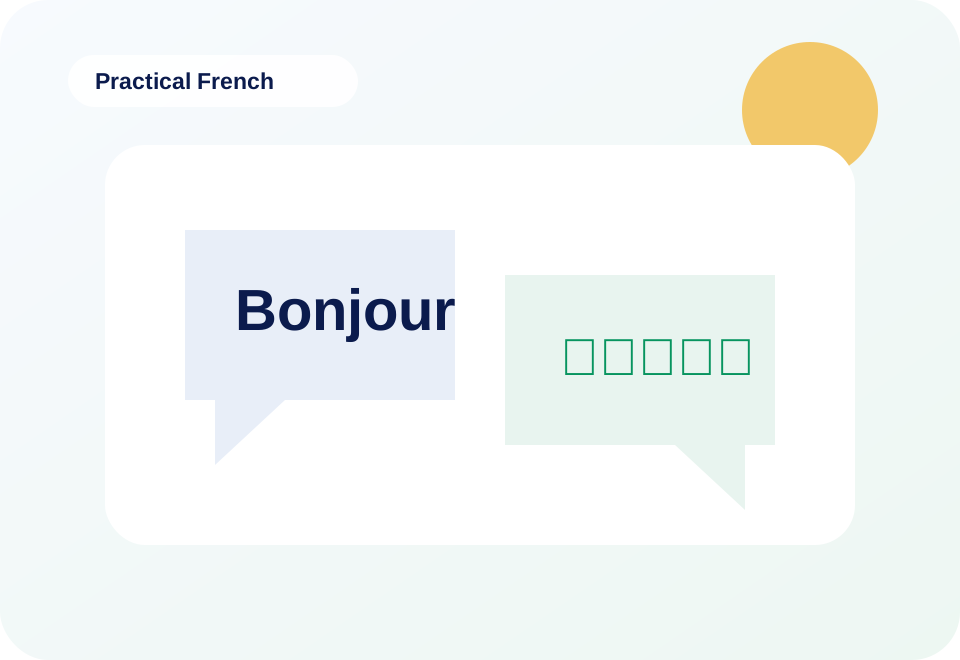
- Bonjour: Hello / good morning
- Bonsoir: Good evening
- Merci: Thank you
- S’il vous plaît: Please
- Au revoir: Goodbye
These words are not optional decoration. Greeting people before asking a question is an important part of everyday French interaction.
Days 6 to 10: understanding and clarification
- Je ne comprends pas: I do not understand
- Pouvez-vous répéter?: Can you repeat?
- Plus lentement, s’il vous plaît: More slowly, please
- Qu’est-ce que ça veut dire?: What does that mean?
Days 11 to 15: transport and directions
Practise asking where a station is, confirming the correct bus or tram and saying that you want to get off. Use a real map while practising so the words connect to an action.
Days 16 to 20: work communication
Learn time, days, common tools, safety words and short responses such as d’accord. Practise saying when you are available and asking what you should do next.
Days 21 to 25: shopping and services
Learn numbers, prices, card payment, receipts and basic product names. Practise a full shop interaction: greeting, asking, paying, thanking and saying goodbye.
Days 26 to 30: appointments and personal information
Practise your name, date of birth, address, phone number and the phrase J’ai rendez-vous, meaning “I have an appointment.”
How to make the plan effective
- Study for five to fifteen minutes every day
- Say each phrase aloud, not only in your head
- Review old phrases before adding new ones
- Use short situation quizzes
- Listen to natural French audio at a slower speed
Grammar becomes useful as you progress, but communication can begin before you understand every rule. The objective of the first month is confidence, recognition and safe basic interaction.